

The Rolex Daytona: A Buyer's Guide to the Most Wanted Chronograph
The Daytona has been on waitlists for years. The secondary market is the only realistic way to buy one. Here is everything you need to know before you do.
The Watch That Defined the Chronograph
The Rolex Daytona was introduced in 1963, named after the Daytona International Speedway and designed for racing drivers who needed to measure elapsed time and average speed. For most of its first three decades, it was a slow seller.
Then Paul Newman wore one. Then the vintage market discovered the "exotic dial" variants. Then Rolex introduced the in-house caliber 4130 in 2000. Then the ceramic bezel arrived in 2016. Each development added a chapter to a story that has made the Daytona the most coveted chronograph in the world.
Today, new Daytonas are essentially unavailable at retail. The secondary market is where buyers go, and where this guide will help you navigate. For a broader view of where Daytona prices sit today, see our 2026 luxury watch market overview.
The References That Matter
Vintage: Pre-1988 (Valjoux-powered)
The earliest Daytonas, references 6239, 6241, 6262, 6263, 6265, are powered by Valjoux movements and represent the collector's market at its most specialized. The "Paul Newman" dial variants (with an Art Deco-style sub-dial design) are among the most valuable Rolex watches ever sold. Buying in this segment requires deep knowledge or access to a dealer with it.
The Zenith Era: 1988-2000 (ref. 16520)
The ref. 16520 introduced the Zenith El Primero movement, modified by Rolex to run at 28,800 bph. These are the last Daytonas with an externally sourced movement and the first with a sapphire crystal. They are increasingly collected as transitional pieces. The "inverted six" dial variant (where the 6 at the bottom sub-dial appears upside down on early examples) carries a premium.
The Modern Era: 2000-2016 (ref. 116520)
The ref. 116520 introduced Rolex's in-house caliber 4130, a movement widely regarded as one of the best chronograph calibers in production. The white and black dial variants are the most traded. This reference was discontinued when the ceramic bezel arrived and is now firmly in collector territory.
The Ceramic Era: 2016-present (ref. 116500 / 126500)
The ceramic bezel Daytona is the current standard. The ref. 116500LN (black bezel) and 116500LN with white dial are the most recognized. The updated ref. 126500LN arrived in 2023 with the caliber 7140 and a slightly updated case. Both trade above retail on the secondary market.
Dial Variants Worth Knowing
The Daytona's dial variants are a significant driver of secondary market premiums.
White dial (Panda). The white dial with black sub-dials is the classic configuration. Clean, legible, and the most recognized Daytona look.
Black dial (Reverse Panda). Black dial with white sub-dials. Slightly less common and carries a modest premium over the white dial in some markets.
Meteorite and exotic dials. Rolex has produced Daytonas with meteorite, onyx, and various stone dials in precious metal cases. These are a different market entirely, rarer, more expensive, and more specialized.
Vintage "Paul Newman" dials. The exotic dial variants on vintage references are the most valuable Daytonas ever made. A genuine Paul Newman dial requires expert authentication.
What to Check Before You Buy
Pushers and crown. The Daytona's chronograph pushers should operate with a precise, positive action. Sticky or imprecise pushers indicate a movement that needs professional service.
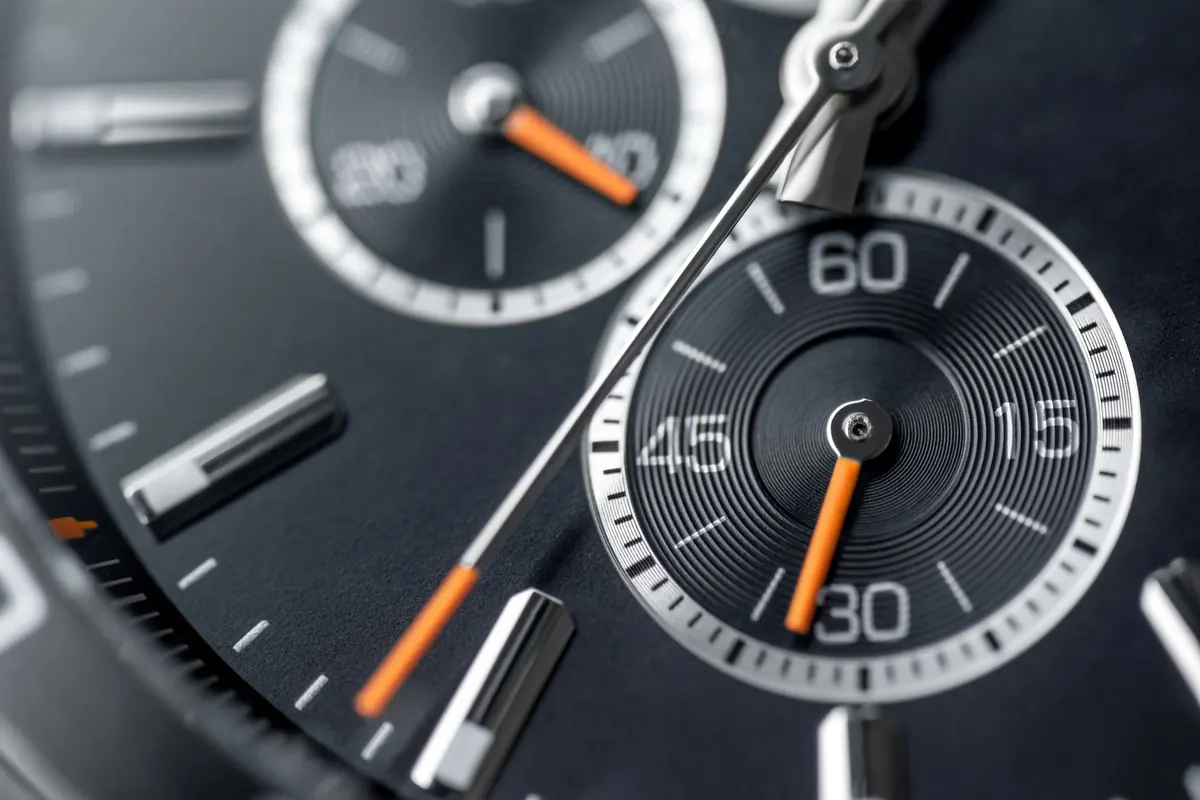
Sub-dial alignment. The three sub-dials should be perfectly centered and level. Misalignment is a red flag for a replaced or tampered dial.
Bracelet condition. The Oyster bracelet on modern Daytonas is robust but shows wear at the clasp and end links. Check for stretch and for the condition of the Oysterclasp. For a full breakdown of what to look for on Rolex bracelets, see our Oyster vs Jubilee bracelet guide. Once you have the watch, use our bracelet link sizing guide to dial in the fit before visiting a watchmaker.
Case condition. The Daytona's case has a specific geometry with polished and brushed surfaces. An unpolished case with original sharp edges is worth meaningfully more than a polished example. Understanding how condition grades work will help you evaluate any listing accurately.
The Market Reality
The Daytona has traded above retail for years. The ceramic bezel references (116500/126500) consistently command premiums on the secondary market, and that dynamic shows no sign of changing given Rolex's production constraints.
For buyers who want a Daytona, the secondary market is not a compromise, it is the only realistic path to ownership. The key is buying from a dealer who authenticates what they sell and can document the watch's history.
At UNAGEDLUXURY, we source Daytonas carefully and authenticate every example. If you are looking for a specific reference or dial configuration, we can help you find it.
Further Reading
- Pre-Owned Rolex as an Investment, How the Daytona fits into the broader picture of Rolex secondary market performance.
- Rolex GMT-Master II Complete Guide, If the Daytona is out of budget, the GMT-Master II is the next most compelling Rolex on the secondary market.
- Luxury Watch Condition Grading Explained, Dial condition and case polish are especially critical on the Daytona. Here is what to look for.
- Rolex Bracelet Link Sizing Guide, How many links to remove from your Daytona Oyster bracelet for a proper fit.
Referenced in this guide
Value any watch- Rolex 1652016520Value it
- Rolex 116520116520, full set$24,000
- Rolex Cosmograph Daytona 116500LN116500LN, full set$35,000
- Rolex Cosmograph Daytona 126500LN126500LN, full set$41,000
Estimates. Not offers. Retail-equivalent, today.